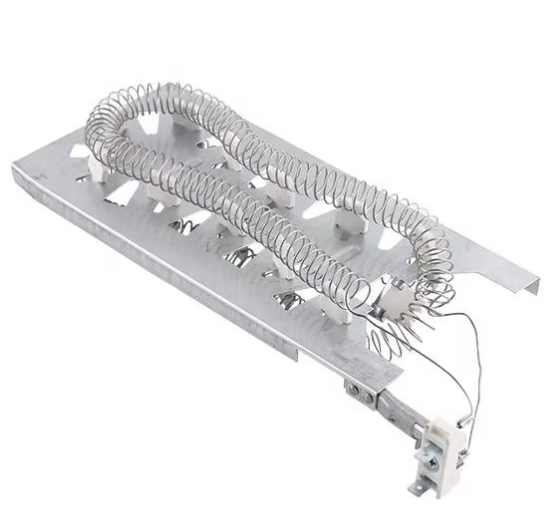
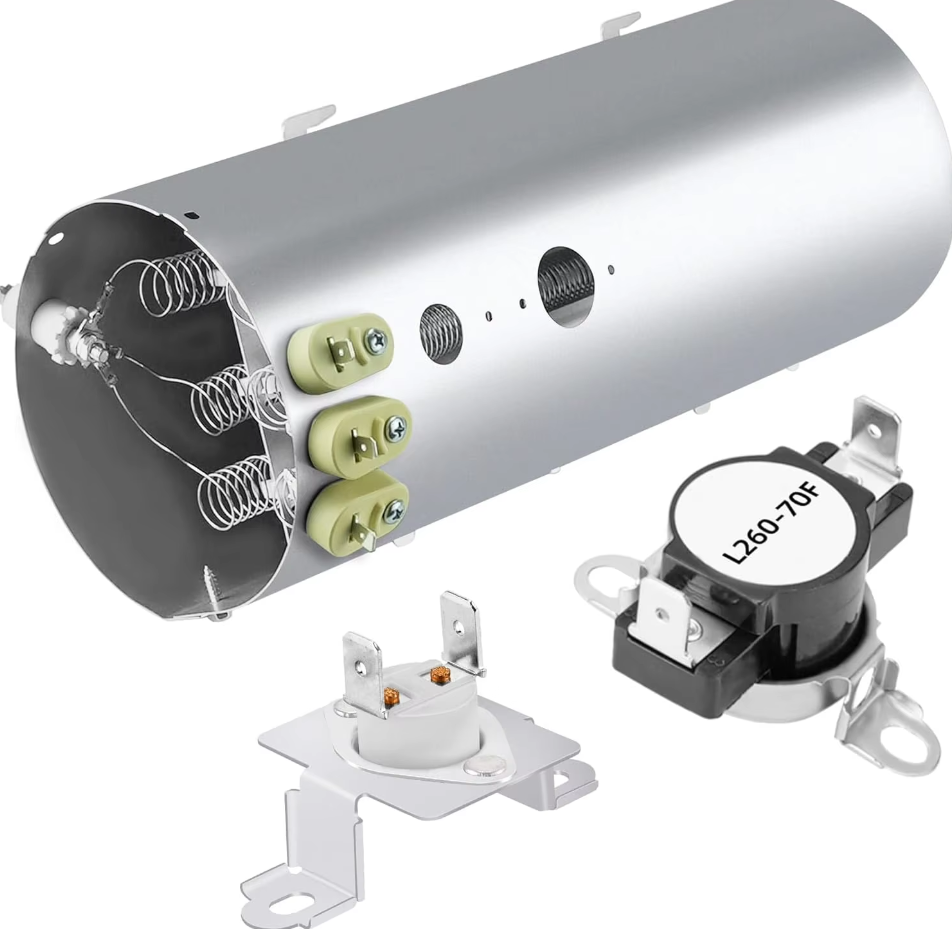
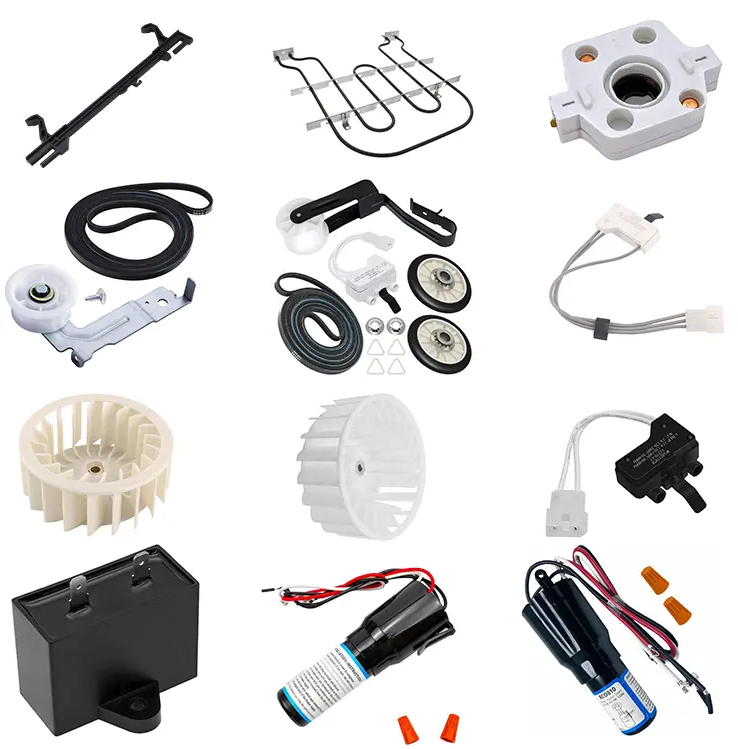
Dryer heating coil replacement is a targeted maintenance procedure focused on removing and replacing the coiled heating element— the component that generates heat—while addressing potential underlying issues that cause coil failure. The process starts with safety precautions: disconnecting the dryer from power (via the circuit breaker or power cord) to eliminate electric shock risk, and clearing space around the dryer to access the coil, which is typically located behind the back panel (for most models) or within the front drum assembly (for compact or high-efficiency dryers). Tools needed include a screwdriver (Phillips or flathead), pliers (for tight wiring connections), and a multimeter (optional, but recommended to test the old coil for continuity—confirming it is faulty before replacement). After removing the access panel, the old coil is identified by its coiled Ni-Cr wire structure, attached to mounting brackets and a wiring harness. Before disconnecting the wiring, taking a clear photo of the harness connection is vital to avoid reversing wires during reinstallation, as incorrect wiring can damage the dryer’s control board or cause the new coil to overheat. The old coil is removed by unscrewing the mounting brackets and gently detaching the wiring harness (using pliers if connections are tight). A thorough inspection of the surrounding area is then conducted: checking for lint buildup in the vent ducts (a leading cause of coil overheating), testing thermal fuses and thermostats with a multimeter (to ensure they are functioning and not contributing to coil failure), and examining the drum seals (to confirm no air leaks are reducing heat efficiency). The new coil—selected for compatibility with the dryer’s model, wattage, and mounting design—is installed by securing it to the brackets and reconnecting the wiring harness per the photo. The access panel is reattached, and the dryer is reconnected to power. A test cycle (high-heat, empty drum) is run for 15 minutes to verify heat production, check for unusual noises, and confirm the coil does not overheat. This process is consistent across global dryer models, with minor variations in access panel location, making it adaptable to different cultural and regional dryer designs. Proper replacement not only restores dryer functionality but also extends the appliance’s lifespan by addressing root causes of coil failure.

Jointgo is a leading home appliance parts factory with over 20 years of production experience. We specialize in manufacturing dryer parts, washing machine parts, kitchen appliance parts, etc. Factory direct sale, wholesale price, fast shipment. Our products are compatible with major brands like Whirlpool, LG, and Samsung. Customization services are available. Trust us for all your home appliance parts needs.
Copyright © 2025 by Ningbo Jointgo Electronics Co., Ltd. Privacy Policy
 EN
EN



![High-Quality Dryer Heating Elements for OEM & Repair [UL Certified]](https://shopcdnpro.grainajz.com/category/87466/2844/7dadcdd0e851a3d4f7836203934c64e8/444.png)