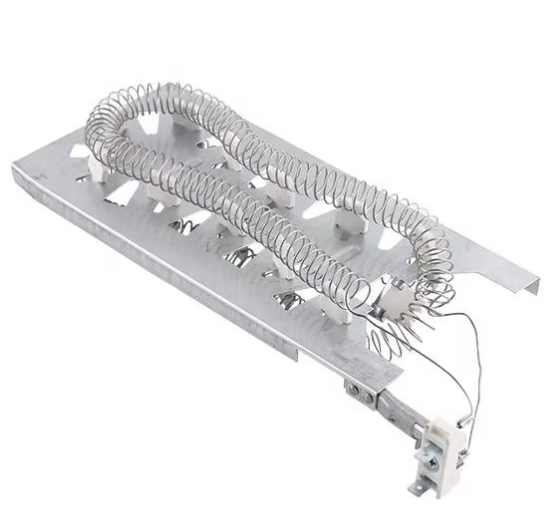
A heating element for the dryer is a specialized component engineered to meet the thermal and electrical requirements of specific dryer models, varying in design, wattage, and mounting configuration to ensure seamless integration. Unlike generic heating components, these elements are tailored to match the airflow patterns, voltage specifications (110V/120V for North American models, 220V/230V for European and Asian models), and physical dimensions of individual dryer brands (e.g., Whirlpool, LG, Samsung, Bosch). The selection of a heating element for the dryer requires careful consideration of three core factors: model compatibility, wattage matching, and safety certifications. Model compatibility is verified by cross-referencing the dryer’s serial number or model number (usually located inside the door or on the back of the appliance) with the element’s compatibility list, as mismatched mounting brackets or wiring harnesses can lead to improper installation and electrical hazards. Wattage matching is equally critical—using an element with lower wattage than the original will result in insufficient heat and extended drying times, while higher wattage can overload the dryer’s electrical system and damage the control board. Safety certifications, such as UL, CE, or SGS, are non-negotiable for global users, as they confirm the element meets regional safety standards for insulation, heat resistance, and fire prevention. Additionally, advanced heating elements for the dryer may feature corrosion-resistant coatings (to withstand moisture in the dryer drum) or ergonomic design elements (such as color-coded wiring) to simplify installation for users of all skill levels. For commercial settings (e.g., laundromats), heavy-duty elements with thicker Ni-Cr coils and reinforced insulation are available to handle continuous, high-volume use. By prioritizing these factors, users across different cultural and geographic regions can select a heating element that delivers reliable performance, extends dryer lifespan, and ensures compliance with local safety regulations.

Jointgo is a leading home appliance parts factory with over 20 years of production experience. We specialize in manufacturing dryer parts, washing machine parts, kitchen appliance parts, etc. Factory direct sale, wholesale price, fast shipment. Our products are compatible with major brands like Whirlpool, LG, and Samsung. Customization services are available. Trust us for all your home appliance parts needs.
Copyright © 2025 by Ningbo Jointgo Electronics Co., Ltd. Privacy Policy
 EN
EN



![High-Quality Dryer Heating Elements for OEM & Repair [UL Certified]](https://shopcdnpro.grainajz.com/category/87466/2844/7dadcdd0e851a3d4f7836203934c64e8/444.png)