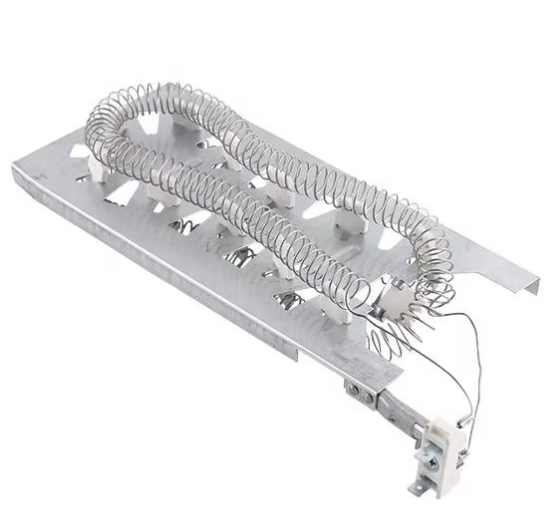
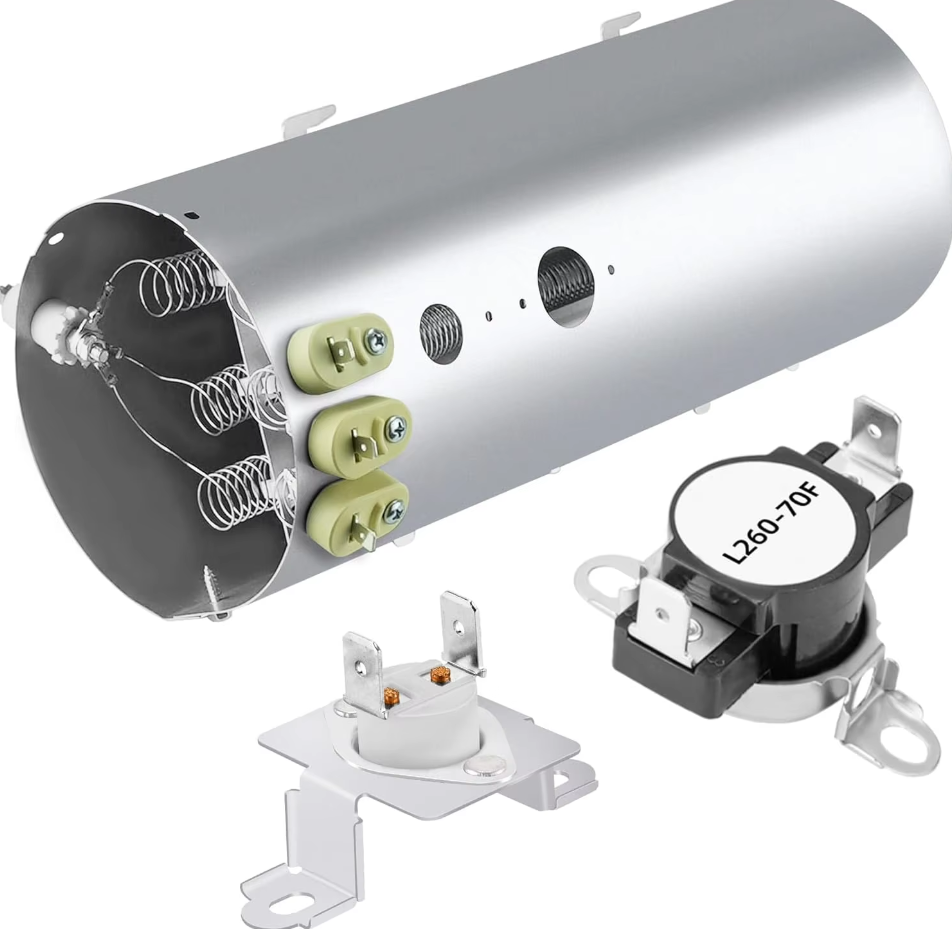
The cost for a dryer heating element falls between \(20 and \)150 for the part, with total costs (including installation) ranging from \(20 to \)350, depending on several key factors. First, part type: OEM elements (made by the dryer’s manufacturer, e.g., Whirlpool WP3387747, Samsung DC97-14486A) cost \(50–\)150, offering guaranteed fit and durability, backed by 6–12 month warranties. Aftermarket elements, produced by third parties, cost \(20–\)80, but quality varies: certified aftermarket parts (meeting UL or CSA standards) perform well, while uncertified parts may have defects (e.g., loose wiring) that cause overheating. Second, dryer model: elements for standard residential dryers (e.g., top-load Whirlpool models) cost \(20–\)80, while those for specialized dryers (e.g., compact LG dryers, commercial Speed Queen units) cost \(80–\)150 due to unique designs. Third, installation: professional repair services charge \(80–\)200, with higher costs for models requiring drum removal (e.g., some front-load dryers) or complex wiring. DIY installation eliminates labor costs but may require purchasing tools (e.g., a multimeter for \(20–\)40) if not already owned. Fourth, additional parts: thermal fuses (\(10–\)30) and thermostats (\(15–\)40) often fail alongside heating elements; replacing them together adds \(25–\)70 but prevents future breakdowns. Finally, purchase location: online retailers (e.g., AppliancePartsPros) often offer lower prices (\(20–\)120) than local stores (\(30–\)150), but local stores provide immediate availability for urgent repairs. When choosing, balance cost and quality—investing in a reliable element (OEM or certified aftermarket) reduces the risk of repeated repairs and potential dryer damage.

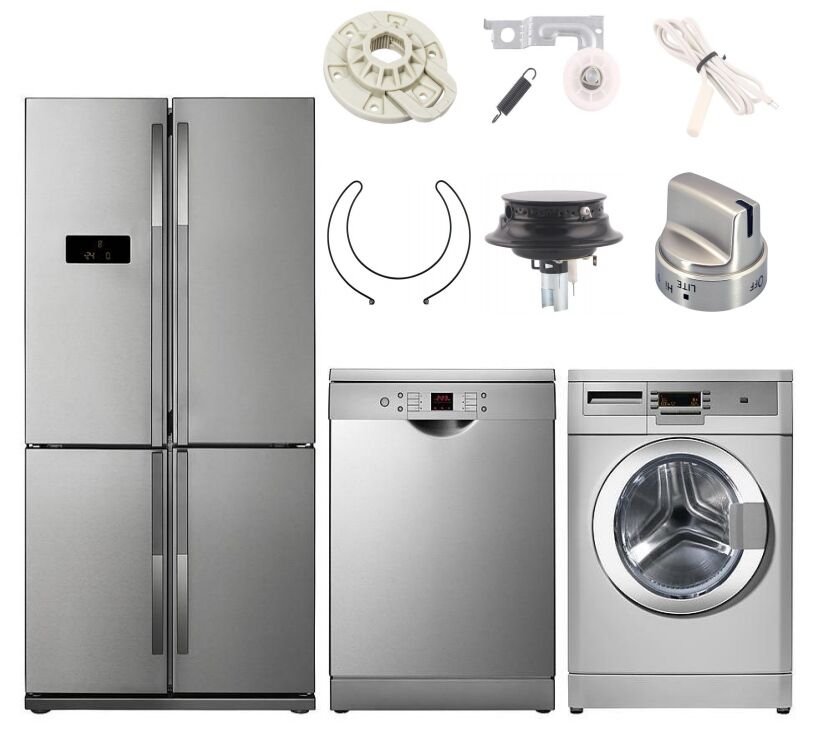
Jointgo is a leading home appliance parts factory with over 20 years of production experience. We specialize in manufacturing dryer parts, washing machine parts, kitchen appliance parts, etc. Factory direct sale, wholesale price, fast shipment. Our products are compatible with major brands like Whirlpool, LG, and Samsung. Customization services are available. Trust us for all your home appliance parts needs.
Copyright © 2025 by Ningbo Jointgo Electronics Co., Ltd. Privacy Policy
 EN
EN



![High-Quality Dryer Heating Elements for OEM & Repair [UL Certified]](https://shopcdnpro.grainajz.com/category/87466/2844/7dadcdd0e851a3d4f7836203934c64e8/444.png)