 EN
EN

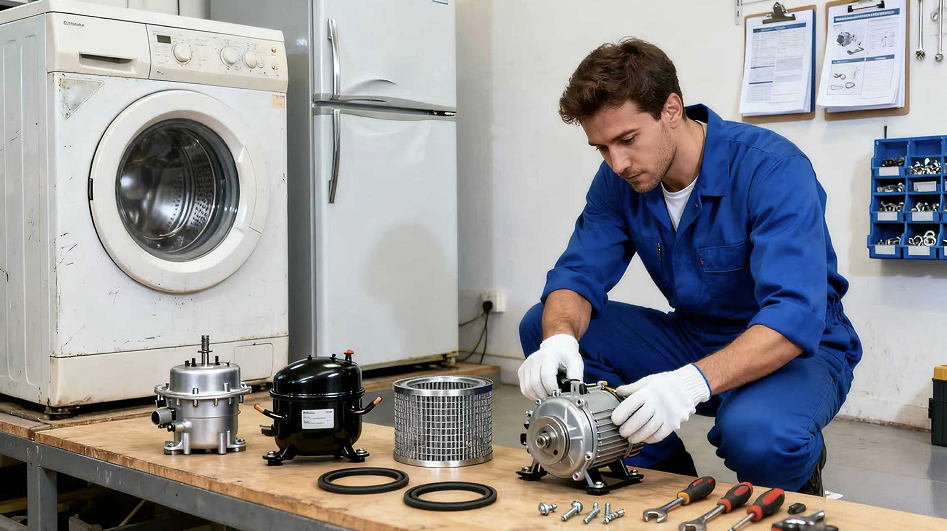
Understanding OEM Appliance Parts Compatibility and Sourcing
What Is OEM Part Compatibility and Why It Matters in Refurbishment
When it comes to replacing parts in appliances, OEM compatibility means getting components that fit exactly what the manufacturer designed for each specific model. The difference matters because these parts like motors, seals, and those tricky control boards actually work just like the ones that came out of the factory originally. Appliance refurbishers know this well from experience. According to some recent data from the Appliance Refurbishment Report in 2023, shops that stick with genuine OEM parts see around 37% fewer customers coming back with problems after repairs. Plus there's the added benefit of keeping warranties intact when needed, plus maintaining those important energy efficiency numbers that consumers look for when buying refurbished appliances.
Using Official OEM Databases and Trusted Suppliers for Accurate Sourcing
Manufacturers offer searchable OEM databases that allow users to filter parts by appliance make/model, manufacturing year range, and component type–mechanical, electrical, or cosmetic. Cross-referencing these databases with certified suppliers minimizes errors and ensures refurbished appliances meet original performance standards.
OEM Part Number Matching and Appliance Model Verification
Before placing any order, it's really important to check the appliance model number against what the manufacturer says in their tech docs. Take for instance that GE dishwasher circulation pump model WD21X24842. This particular part needs very specific voltage requirements and certain plumbing specs to work properly. Getting the wrong parts installed can cause all sorts of problems down the road. We've actually seen quite a few issues come up from mismatched components over the years. Leaks happen, electrical systems short out, and worst of all, service agreements get voided. According to last year's Refurbishment Quality Survey, about 62 percent of installation problems stem from using incorrect parts. That's why taking those extra few minutes to double check specs makes such a big difference in avoiding headaches later on.
Aftermarket and Third Party Appliance Parts: Cost, Fit, and Reliability
Evaluating Aftermarket Parts Compatibility with Major Appliance Brands
Third party components are responsible for around 43% of appliance breakdowns in secondhand units according to the latest Appliance Repair Study from 2024. Aftermarket replacement parts usually save consumers between 20 to 80 percent compared to original manufacturer options, but they don't always fit properly across different brands such as Whirlpool, LG, or Samsung appliances. The engineering specifications for these devices often require precision within plus or minus half a millimeter on important parts, something most generic replacements simply can't match. Looking at actual repair data from last year's analysis covering over 1,200 cases reveals some startling numbers too. Dishwashers and refrigerators showed particularly high failure rates at about 37% when technicians installed non-OEM electrical control boards and water valves. These mismatches create all sorts of problems down the road for homeowners who thought they were saving money upfront.
Pros and Cons of Third-Party vs. OEM Appliance Parts
| Factor | Third-Party Parts | OEM Parts |
|---|---|---|
| Initial Cost | $15–$120 average | $45–$300 average |
| 5-Year Failure Rate | 32% (CI: ±4%) | 11% (CI: ±2%) |
| Warranty Coverage | 90-day limited | 2-year full |
| Lead Time | 2–5 days | 3–14 days |
Although third-party heating elements cost 60% less upfront, they require replacement 2.3 times more often than OEM versions in dryer repairs.
Physical and Electrical Compatibility: Size, Shape, and Connector Fit
According to the latest Appliance Compatibility Index from 2024, nearly a third (28%) of those aftermarket door seals don't quite fit right, and almost one fifth (19%) of control boards are off spec by over 1.5mm. When it comes to fridge compressors, connector problems alone make up 14% of all replacement cases when people go with third party parts instead of original ones. Take the defrost timer from one big name brand as an example. It needs precisely spaced 12 pins, but guess what? Forty percent of the cheaper knockoffs get this wrong, which usually means another trip to the repair shop costing around $180 on average. And let's not forget about voltage regulators either. These components in after market ranges tend to vary about 22% more than what manufacturers actually allow, making them real trouble spots that can end up damaging control boards down the road.
Electrical testing protocols–verifying amperage draw (±5%) and connector pin depth (±0.2mm)–have reduced compatibility failures by 61% in trial programs.
Reliable Sourcing Channels for New and Hard to Find Appliance Parts
Best Practices for Sourcing from Local Stores, Online Retailers, and Manufacturers
The best approach seems to mix checking out parts locally first (about 6 out of 10 refurbishers actually go this route) along with placing big orders online when possible. Most serious refurbishing operations have their own ways to check if suppliers are telling the truth. They'll look up part numbers using manufacturer databases and compare them against specific equipment lines such as those GE makes with their GFD prefix or Samsung's RF line items. Some companies also bring in outside experts who audit online sellers by looking at how often products get returned because they don't fit properly. These checks really pay off though. Facilities report cutting costs somewhere around $1,200 each year just from avoiding all those mismatched components that would otherwise sit unused in storage.
Trusted Sources for Whirlpool, GE, Samsung, LG, and Kenmore Appliance Parts
Certified distributors from manufacturers can hit around 92% accuracy when it comes to getting parts right on the first try for important components like dishwasher pumps and fridge compressors according to the Appliance Refurbishment Council report from last year. When dealing with older models that are no longer made, suppliers who have ISO 9001 certification and focus on finding equivalent parts across different brands actually cut down on missing inventory issues by about 41% compared to those without proper verification. The latest compatibility checks for Whirlpool's WTW series and LG's linear compressors go beyond standard testing now including detailed 3D scans of latches and wiring harnesses so technicians know exactly what fits and works properly.
New Old Stock (NOS) and Refurbished Parts: Availability and Quality Control
A recent 2024 study on material durability found that around two thirds of NOS inventory actually reaches today's efficiency standards once it gets properly reconditioned. Refurbishers run all sorts of tests on these items too, like putting oven heating elements through 500 cycles and running washing machine motors under load for straight 72 hours just to make sure they meet those ENERGY STAR requirements. Most importantly, certified programs are now covering about 8 out of 10 microwave turntables and dryer heating coils that get refurbished. And when it comes to warranties, almost four fifths of them last just as long as what the original manufacturers offer.
Integrating Part Compatibility into Refurbishment Workflows for Long-Term Performance
Replacement Parts Lifecycle Planning by Brand and Appliance Type
Good lifecycle planning really comes down to looking at how different products get used and when they tend to break down. The latest repair stats from 2024 indicate something interesting about washing machines too. Front load models actually see their pump assemblies lasting around 18 percent longer compared to top loaders, which means parts departments need to stock differently for each type. Many top repair shops have developed these multi-level part categorization methods to handle items that disappear from shelves fast. Think about those microwave control panels or fridge compressors nobody stocks anymore because manufacturers stop making them so suddenly. These classification systems help technicians know what spare parts will still be available next month versus what might already be obsolete by then.
Modular design principles support cost-effective upgrades by standardizing connectors and dimensions, enabling subsystem swaps without replacing entire appliance cores. A 2023 study found factories adopting this approach reduced parts inventory costs by 29% while maintaining 98% same-day repair readiness.
Building Compatibility Checks into Routine Repair and Refurbishment Processes
Refurbishment teams achieve 93% first-time-fit rates by embedding verification at three key stages:
- Disassembly - Record the original part number and connector type
- Repair - Test replacement components under load conditions
- Reassemble - Confirm electrical tolerances (± 5% for most HVAC control modules)
Standardized checklists aligned with OEM specifications eliminate guesswork, especially for cross-brand components like dishwasher heating elements, where voltage and wattage tolerances vary significantly.
Sustainable Refurbishment: The Role of Used and Reconditioned Appliance Parts
Around 42 percent of all rebuilt refrigerators these days actually run on refurbished compressor assemblies, which helps cut down electronic waste by roughly 16 thousand tons each year across North America alone. When manufacturers clean and repair these parts using special methods, they get them back to about 90% of what they were originally capable of doing. And because it costs less money to do this kind of work, some factory owners have started offering longer guarantees too, stretching those standard 90 day warranties out to a full twelve months sometimes. For appliances that need hard to find replacement pieces, companies are figuring out ways to recreate those parts themselves through reverse engineering techniques. This approach adds anywhere from three to five extra years onto the life of most appliances, creating what many call a circular economy model where nearly 8 out of every 10 materials just keep getting reused instead of ending up in landfills.